


Summary:
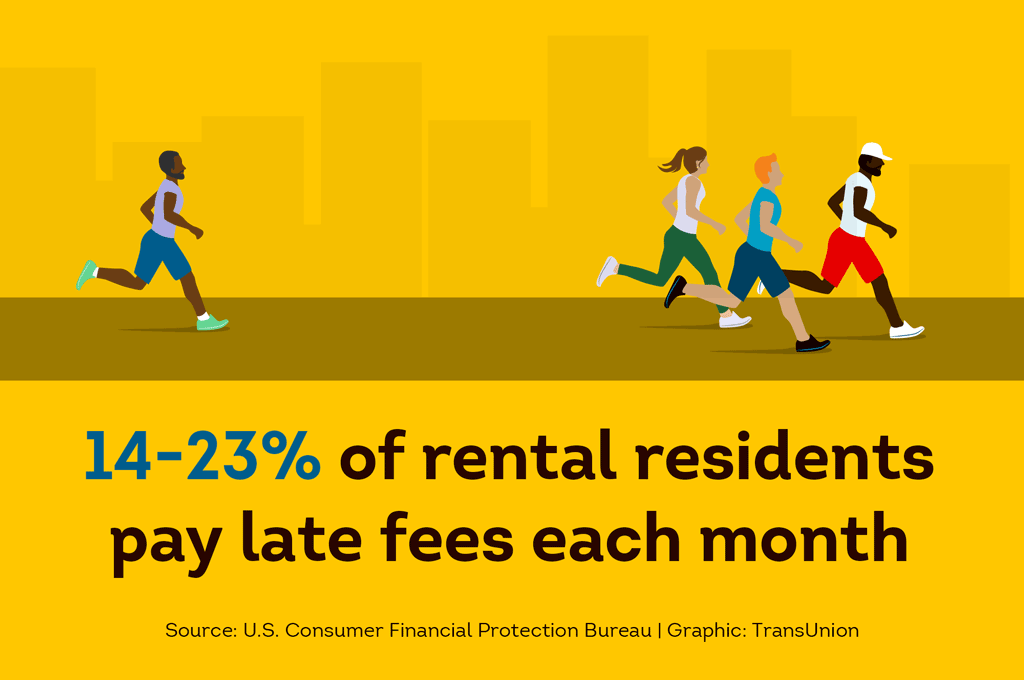
- 14-23% of rental residents were charged late rent fees in any given month during the past year, according to the Consumer Financial Protection Bureau
- Cosigners for a rental property are financial backers that are responsible for paying rent if a tenant defaults, according to Lemonade
- Rental property cosigners may give landlords peace of mind, but also carry potential risks that should be considered
- Like primary tenants, landlords should screen lease cosigners robustly and potentially confirm they have the resources and payment habits to step in if the primary tenant defaults
Disclosure and Disclaimer
This post only contains educational information. No financial, tax or legal advice.
This information is for educational purposes only and we do not guarantee the accuracy or completeness of this information. This website may contain links to third party websites. We are not responsible for their content or data collection. Trademarks used in this material are property of their respective owners and no affiliation or endorsement is implied. Remember that this material is intended to provide you with helpful information and is not to be relied upon to make decisions. This information does not constitute financial, tax or legal advice and you should consult your own professional adviser regarding your situation.
A rental cosigner, like a co-pilot, is someone who helps ensure a smooth journey forward if the tenant encounters financial turbulence.
For landlords, having that extra bit of assurance can be necessary. According to a data review from the Consumer Financial Protection Bureau, 14-23% of rental residents were charged late rent fees in any given month during the year observed.
And, those who incurred at least one late fee, were far more likely to incur multiple fees of the same kind. Of the residents that received one late fee, 30% were still paying rent late even five months later.
For independent landlords with thin margins, consistently late, short, or non-existent payments may wreck your rental business. This is why so many landlords conduct financial screening with a professional tenant background check service like SmartMove®.
That said, if the data shows a rental applicant doesn’t quite stack up, some landlords further protect themselves by requiring a rental property cosigner on the lease.
This article covers what a cosigner for rental property is, the circumstances when a landlord might want a cosigner rental agreement when evaluating an applicant, potential pros and the cons to having a financial backer on a lease, and how to screen tenants and their cosigners.
What is a cosigner on a lease?
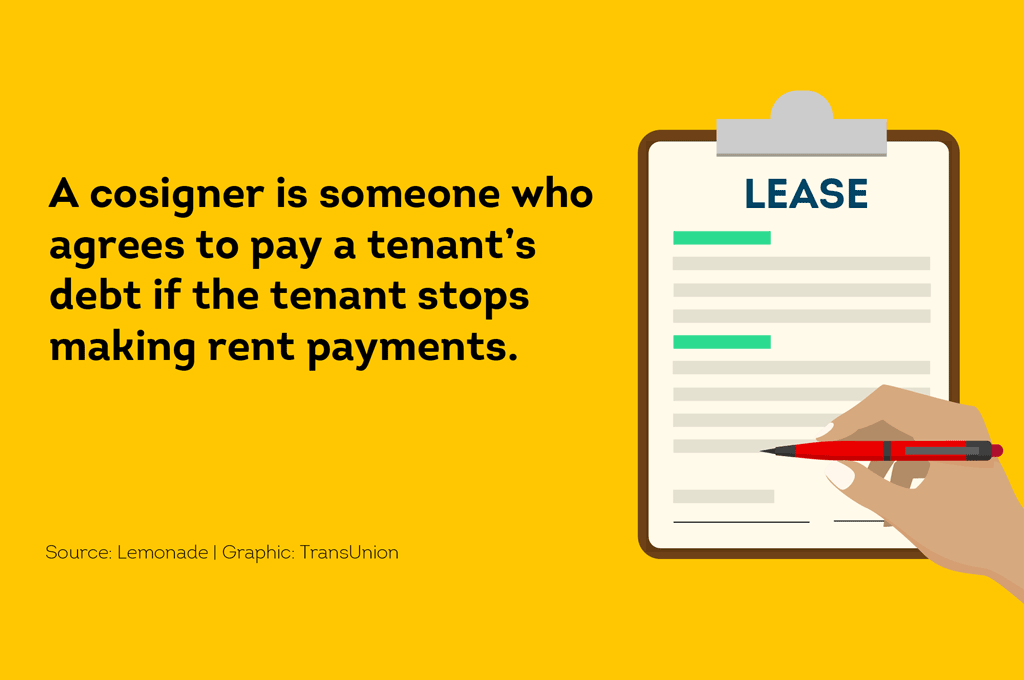
According to landlord insurance site Lemonade, a cosigner on a lease agreement is a person designated to make the rent payments if the tenant can’t do it. Essentially a potential financial safety net, a rental property cosigner signs the lease agreement and is held fully responsible for rent if the tenant stops paying.
What is a Guarantor vs. Cosigner?
What is a guarantor vs. a cosigner is a common question landlords have. While the terms are often used interchangeably, there is technically a difference between a rental property cosigner and a guarantor. According to Lemonade, both have financial responsibilities, but a guarantor only steps in if the tenant defaults. On the other hand, a cosigner is responsible for payment from the beginning.
| Cosigner | Guarantor | Both |
|---|---|---|
Signs the lease, may live in the rental property, and is equally responsible with the tenant for rent payments from the beginning of the lease. |
Only becomes responsible if the tenant stops paying rent. A guarantor may or may not sign the lease and does not have the right to live in the rental property. |
May be financially responsible for rental payments if the tenant stops paying rent. |

Pro Tip:
Read more about guarantors vs. cosigners on a lease and the potential pros and cons of requiring these financial backers.
Why does a rental property cosigner make sense for some applicants?
There are many reasons rental applicants might have a lease cosigner. According to housing site Zillow, some common reasons landlords might consider someone else to back rent payments may include:
- Limited credit history, such as younger rental residents or students who have not had time to build a solid credit profile
- Limited rental history, such as someone who has been recently divorced or is moving away from home for the first time
- Low credit score, which could indicate financial irresponsibility or a riskier choice to landlords
- Insufficient income, especially if it is just under your required salary cut-off
- Shaky employment, such as situations with seasonal or inconsistent work
- Past evictions, that could indicate someone has had previous trouble with housing
In situations like the above, having a cosigner on the lease or rental agreement may give landlords extra peace of mind that the rent will be paid no matter what.
Who is a good rental property cosigner?
Given that the cosigner is financially responsible for the rental payment, tenants usually select someone close to them for this role, according to Lemonade. The article explains cosigners should be 1) over the age of 18, and 2) financially responsible.
They often include:
- Parents or other relatives
- Significant others
- Good friends
How can landlords review what makes a good cosigner for a rental property? Whomever a tenant selects as a cosigner, it may be key for you to screen the person to understand their own financial, credit, criminal, and eviction history.
Pro Tip:
Allowing a cosigner on a lease and otherwise working with tenants may help boost your landlord-tenant relationship. This may help your rental business and improve your local reputation.

What are potential rental property cosigner benefits and drawbacks landlords need to know?
Having a rental property cosigner on a lease may bring both opportunities and challenges for landlords. It’s important to consider the good and bad when deciding how to manage tenants that don’t quite meet your criteria.
Potential Benefits of a Cosigner
Accepting cosigners on rental applications may have several potential benefits for both landlords and tenants, including the following:
- Better financial protection. According to Stone Oak Property Management, cosigners help reduce the chance of missed rent payments. If the tenant defaults, the cosigner is legally liable to pay. This can lower financial risk.
- Expands rental applicant pool. The same article explains that another advantage of allowing cosigners is it may increase your potential tenant pool. This is because it allows you to relax your standards, while still having the security of the cosigner backing the lease.
- Reduce vacancy. Related to the above, permitting options like apartment cosigners can help you reduce vacancy when the market is tight. By increasing the applicant pool, you may have an advantage to fill empty units faster.
- Help tenants build credit profile. According to TransUnion, landlords and tenants have the option to report rental payments to credit agencies, which may help build a resident’s credit profile. If someone has a thin credit history, allowing a cosigner may help a tenant build their own credit, while also potentially having the extra incentive to pay rent on time.
These benefits could be a boon to your property business, especially if rentals in your area are cooling or it’s difficult to find qualified tenants.
Potential Drawbacks of Cosigning for Landlords
On the other hand, cosigners aren’t magical, guaranteed money machines either. There are some potential pitfalls to be aware of if you’re considering allowing cosigners for rental property.
- If the cosigner fails, you’re still on the hook. If something happens with the lease cosigner, you may end up in a mess trying to track down rental payments or damages from two parties, according to Jaxon Texas Property Management.
- Cosigners don’t necessarily change tenant behavior. The same article points out that, while house or apartment cosigners may help with finances, they don’t necessarily invest in things like property maintenance and aren’t responsible for tenant behavior or complaints. This is where rental history screening is valuable.
- Cosigners only cover financial liability. For example, if someone has a criminal record, a financial backer probably can’t do much to protect your property.
- Cosigners also require screening. You should run background checks and financial screening on any rental property cosigner to help verify they are financially responsible and can meet the rent. This can add to your workload. Though, thankfully with SmartMove, you can get fast, easy-to-read tenant screening reports.
These watch-outs are some of the things you could consider when deciding whether or not to accept cosigners on your lease.
Pro Tip:
When screening tenants or cosigners, there are several types of background checks you can consider running. These can help you glean information to help you make more confident leasing decisions.
When should landlords run a cosigner background check?
In short: pretty much always. After all, when you screen tenants, you do so because you want to know things like:
- If they can manage the rent
- If they have a history of paying debts on time
- If they’ve been a responsible tenant in the past
- If they have any previous evictions
- If they might pose a threat to your property
Most landlords conduct these kinds of checks on every resident who will be living in the unit. Then, rental cosigners will be where the buck falls if your tenant fails to pay rent on time and in full. So, it makes sense to screen them, as well.
However, Stone Oak Property Management reminds landlords that requiring a cosigner may increase your screening time. This is because they advise that cosigners should undergo their own process, which might include:
- An application
- Credit report
- Criminal background check
- Eviction history
- Income verification and financial screening
In addition to these, with every SmartMove package you also get a ResidentScore®, which is a proprietary calculation resembling a traditional credit score. It was designed to help predict potential eviction risks. Even with cosigners, this data may help you assess their responsibility.
How to Confirm Tenant and Cosigner Finances with SmartMove Screening
A good tenant cosigner, like a good co-pilot, is someone both you and the tenant can trust to get you to your destination safely. However, in a rental world stocked with potential dangers, it’s essential to listen to more than your gut. Help make decisions based on data with fast, online tenant screening through SmartMove.
If your tenant doesn’t quite meet your standards financially, their cosigner should––or else you’ll be the one paying the price. Help discover if the cosigner really has the stats to take on the responsibility:
- A tenant credit check can help you assess past payment patterns and debt load
- Income Insights can help you confirm your prospective tenant actually matches what they claim on their application.
- ResidentScore, exclusive to SmartMove, is a proprietary score designed to help predict potential eviction risks.
Then, can you trust a lease cosigner who has had their own history of housing-related issues? Get more familiar about their past with a criminal background check and eviction report. You can also get identity verification, which helps confirm a rental property cosigner is actually who they say they are.
With robust information delivered quickly and securely from major credit agency TransUnion, you can feel more confident that your rental decisions could land safely. Simply create a free account and start screening today.
Know your applicant.

Rental Property Cosigner FAQs
One of the easiest ways to review the credit of a rental property cosigner is to use a professional background check service like SmartMove. You definitely want to check a cosigner’s credit because this report can help you understand if the financial backer has the means and habits to step in if the tenant is unable to pay the rent.
Having a lease or apartment cosigner may bring many benefits to tenants. According to Zillow, cosigners may help tenants get approved for housing more easily, provide an opportunity to build credit, have a wider pool of apartments to choose from, and confirm a lower security deposit or rental rate.
If both the tenant and the cosigner default on the rent payment, it could be a headache for landlords. According to RentCafe, landlords may need to take legal action against non-paying cosigners, such as taking them to court or sending the debt to collections.
This can be an important consideration when deciding whether to allow cosigners or not. And, it’s an excellent reminder to screen both tenants and cosigners to help verify they are responsible and likely to pick up the slack if the tenant fails.

Additional Disclosure:
For complete details of any product mentioned in this article, visit www.transunion.com. This site is governed by the TransUnion Rental Screening Privacy Policy Privacy Notice located at TransUnion Rental Screening Solutions, Inc. Privacy Notice | TransUnion.